What Your Mineral Rights Are Actually Worth in the Powder River Basin (And How to Find Out)
- Feb 15
- 6 min read
If you own mineral rights in Wyoming's Powder River Basin, you've probably wondered what they're actually worth. Maybe you inherited them from a parent or grandparent. Maybe you've been getting small royalty checks for years and never thought much about it. Or maybe an oil company sent you a lease offer out of the blue and now you're trying to figure out whether the number on the page is fair.

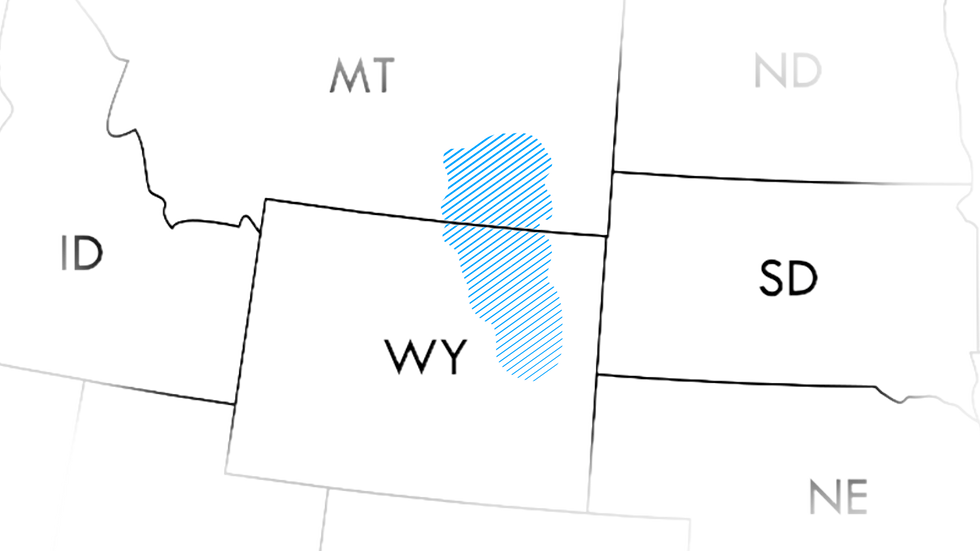
Here's the truth: mineral rights valuation in the Powder River Basin isn't as simple as looking up a price per acre online. The basin is enormous, spanning parts of northeast Wyoming and southeast Montana across counties like Converse, Campbell, Johnson, Sheridan, and beyond. What your minerals are worth depends on a specific set of factors unique to your ownership. Let's walk through each of them.
Location Within the Basin: Zip Code Matters
The Powder River Basin covers millions of acres, but not all of those acres are created equal. The southern portion of the basin, particularly Converse County, is where horizontal drilling has taken off in a major way. Operators like Anschutz Exploration Corporation and EOG Resources have been running multi-rig programs there, targeting formations like the Niobrara, Turner, Mowry, and Sussex with modern horizontal wells that can produce hundreds of thousands of barrels over their lifetime.
If your minerals sit in or near active drilling units in Converse County, they're going to be worth significantly more than minerals in a part of the basin with little to no recent development. Meanwhile, Campbell and Johnson counties are seeing increased exploration as operators delineate new targets further north. The takeaway? Proximity to active drilling, and specifically to permitted or producing horizontal wells, is one of the single biggest drivers of value.
Net Mineral Acres: Understanding What You Actually Own
This is where most mineral owners get confused, and understandably so. "Net mineral acres" is the figure that actually matters for valuation, not the gross surface acreage of a family ranch, and not the total acres described in a deed.
Your net mineral acres (NMA) account for your fractional ownership interest in the minerals beneath a given tract. For example, if your family owns a 1/4 mineral interest in a 640-acre section, you own 160 NMA. If that interest has been further divided among heirs over generations, your share could be far smaller. Many mineral owners in the Powder River Basin are surprised to learn they own just a few net acres, but even a small interest in the right location can be valuable when a horizontal well is being drilled through your section.
Lease Status and Royalty Rate
Whether your minerals are currently leased, and the terms of that lease, have a direct impact on value. If you're already under lease with an operator, the royalty rate in your lease is critical. The standard royalty in Wyoming has historically been 12.5% (a 1/8th royalty), but many modern leases in the Powder River Basin are negotiated at 18.75% to 20% or even higher in competitive areas.
A higher royalty rate means more income per barrel produced, which directly increases the present value of your minerals. Other lease terms matter too: Does the lease allow post-production deductions? Is it held by production on an old vertical well, or does it cover new horizontal formations? These details can mean the difference between a lease that's genuinely protecting your interest and one that's quietly eroding your value.
Current and Nearby Production
Minerals that are already producing royalty income are the easiest to value. If you're receiving monthly royalty checks, a buyer can look at your decline curve, the projected future production of the wells on your acreage, and calculate a present value for that income stream. In the Powder River Basin, producing minerals typically sell for somewhere between 4 to 7 times your annual royalty income, depending on the quality of the wells, the operator, and commodity prices.
But even if your minerals aren't currently producing, they can still carry significant value if there's active drilling nearby. Permitted wells, drilling spacing units (DSUs) that include your section, and operator development plans all signal that production could be coming to your acreage. The Powder River Basin is still in the relatively early stages of horizontal development compared to more mature plays like the Permian, which means there's meaningful upside for mineral owners in areas where operators are actively expanding.
The Operator on Your Acreage
Not all operators are created equal, and the company developing (or planning to develop) your minerals matters more than most people realize. In the Powder River Basin, Anschutz Exploration has been the most active driller, running a multi-rig program and completing dozens of wells per year across Converse, Campbell, and Johnson counties. EOG Resources, Continental Resources, Devon Energy, and Occidental Petroleum also hold significant acreage positions in the basin.
A well-capitalized operator with an active drilling program on your section is a strong signal of value. It means permits are being filed, wells are being drilled, and royalty checks are likely coming. On the other hand, if your minerals are leased to a smaller company that has been sitting on acreage without development, the near-term value picture looks different. Understanding who holds the lease on your minerals, and what their development plans look like, is essential context for any valuation.
The Formations Being Targeted
One of the things that makes the Powder River Basin exciting from a mineral owner's perspective is the "stacked pay" potential. Unlike some basins where operators target a single formation, the PRB offers multiple productive zones layered on top of each other. The primary horizontal targets today include the Niobrara, Mowry, Turner, Sussex, Parkman, and Shannon formations, representing thousands of feet of stacked pay.
What this means for mineral owners is that a single section of land could eventually support multiple wells in different formations. Early development might start in the Turner or Sussex sandstones, and as operators refine their techniques, they move into the Niobrara and Mowry shales. This stacked development potential is one of the reasons the Powder River Basin is often compared to the Permian Basin in its early days. There's a lot of runway left.
Commodity Prices and Timing
It goes without saying, but oil and gas prices affect mineral rights values. When crude is trading at $80 per barrel, operators are more aggressive with drilling programs, royalty income is higher, and buyers are willing to pay a premium for mineral interests. When prices dip, everything contracts.
For Powder River Basin minerals specifically, the economics of drilling are an important nuance. Break-even costs for Niobrara and Mowry wells in the PRB tend to run higher than in the Permian, often above $50 per barrel, due to factors like water costs, depth, and infrastructure limitations. This means commodity prices don't just affect your royalty income; they also affect whether operators will drill on your acreage in the first place. In a sustained high-price environment, the basin sees more rigs, more permits, and more development. That's directly tied to your mineral value.
So What Are Your Minerals Actually Worth?
The honest answer is: it depends. Mineral rights pricing in the Powder River Basin can range from a few hundred dollars per net mineral acre in undeveloped areas far from active drilling, to several thousand dollars per NMA in the heart of Converse County where horizontal wells are producing strong results. Producing minerals with established royalty streams can command even higher multiples.
The only way to get an accurate picture of what your specific interest is worth is to have someone who understands the basin look at the details: your legal description, your net mineral acres, your lease terms, the operators on your acreage, nearby permits and production, and current market conditions. A generic online calculator can't account for the nuances that drive real value.
Get a Free, No-Obligation Valuation
At Timberline Minerals, we specialize in mineral rights acquisitions in the Powder River Basin. We work directly with mineral owners, many of whom have inherited their interests, to provide clear, honest valuations based on real data: current drilling activity, operator development plans, well production, and market pricing.
If you're curious about what your mineral rights are worth, or if you've received an offer and want a second opinion, we'd be happy to take a look. There's no cost and no obligation, just a straightforward conversation about your minerals and your options.
Contact us today at timberlineminerals.com or give us a call at (512) 626-7267. We're easy to talk to and here to help.